|
|
|||||||||||||||||||||||||||||||||||||||||||||||||||||||||||||||||||||||||||||||||||||||||||||||||||||||||||||||||||||||||||||||||||||||||||||||||||||||||||||||||||||||||||||||||||||||||||||||||||||||||||||||||||||||||||||||||||||||||||||||||||||||||||||||||||||||||||||||||||||||||||||||||||||||||||||||||||||||||||||||||||||||||||||||||||||||||||||||||||||||||||||||||||||||||||||||||||||||||||||||||||||||||||||||||||||||||||||||||||||||||||||||||||||||||||||||||||||||||||||||||||||||||||||||||||||||||||||||||||||||||||||||||||||||||||||||||||||||||||||||||||||||||||||||||||||||||||||||||||||||||||||||||||||||||||||||||||||||||||||||||||||||||||||||||||||||||||||||||||||||||||||||||||||||||||||||||||||||||||||||||||||||||||||||||||||||||||||||||||||||||||||||||||||||||||||||||||||||||||||||||||||||||||||||||||||||||||||||||||||||||||||||||||||||||||||||||||||||||||||||||||||||||||||||||||||||||||||||||||||||||||||||||||||||||||||||||||||||||||||||||||||||||||||||||||||||||||||||||||||||
|
|
|
|||||||||||||||||||||||||||||||||||||||||||||||||||||||||||||||||||||||||||||||||||||||||||||||||||||||||||||||||||||||||||||||||||||||||||||||||||||||||||||||||||||||||||||||||||||||||||||||||||||||||||||||||||||||||||||||||||||||||||||||||||||||||||||||||||||||||||||||||||||||||||||||||||||||||||||||||||||||||||||||||||||||||||||||||||||||||||||||||||||||||||||||||||||||||||||||||||||||||||||||||||||||||||||||||||||||||||||||||||||||||||||||||||||||||||||||||||||||||||||||||||||||||||||||||||||||||||||||||||||||||||||||||||||||||||||||||||||||||||||||||||||||||||||||||||||||||||||||||||||||||||||||||||||||||||||||||||||||||||||||||||||||||||||||||||||||||||||||||||||||||||||||||||||||||||||||||||||||||||||||||||||||||||||||||||||||||||||||||||||||||||||||||||||||||||||||||||||||||||||||||||||||||||||||||||||||||||||||||||||||||||||||||||||||||||||||||||||||||||||||||||||||||||||||||||||||||||||||||||||||||||||||||||||||||||||||||||||||||||||||||||||||||||||||||||||||||||||||||||||
|
|
CHAPTER 3B: BLOCK 3
BLOCK 3, LOT 3—HISTORICAL BACKGROUND
The deed and census data indicates that Frank McWorter sold Block 3, Lot 4 to Spaulding Burdick in 1852. There are 13 deed transactions for this lot throughout the following century. While detailed information exists on the life of Frank McWorter (see Walker 1983), little information survives for the subsequent occupants of the lot. Using the deed, census and tax records (see below) we can infer that the Cobb family made some improvement on the property from at least 1867. Buildings occupied the lot until about 1875. In subsequent tax records (1883 and 1888) this parcel is grouped with other lots and it is unclear if a building existed on the lot at the end of the nineteenth century when M. Kellum and later Sylvester Baker owned the property.
In the 1860 Federal Census Alexander Clark is listed as a blacksmith. Clark, his wife Harley, and their four children are classified as mulatto. In the 1865 State Census he is still listed as the head of household with 6 family members. A.B. Cobb purchased the lot from Clark in 1865, and is classified in the same census as white with a household of six individuals. In the 1870 Federal Census A. B. Cobb is listed as a physician with his wife Laura and their four children living in his household. In the 1880 Federal Census, Z. Kellum is listed as a farmer with his wife Lydia and their three male offspring, (all listed as farm laborers) and their 5 year old daughter. The deed, census, and tax data related to Block 3, Lot 3 follow. The names italicized are those who may have occupied the lot since they appear in both the deed and the census data.
DEED TRANSACTIONS
HADLEY TOWNSHIP RECORDS
1855 STATE CENSUS
1860 FEDERAL CENSUS
1865 STATE CENSUS
1870 FEDERAL CENSUS
1880 FEDERAL CENSUS
Excavation Unit 1 in Block 3, Lot 3 was the first unit explored by the 2005 NSF–REU field school (Figure 3B.1). The archaeologists excavated a 5.0 x 5.0 ft. unit in arbitrary 0.5ft. levels until they reached a noticeable stratigraphic layer. (For a more detailed technical overview see the Unit Summaries in the appendix.) These arbitrary layers are designated Levels A1 and A2. The plow zone in this area tended to be about 1.0 ft. below the surface. It generally consisted of a 10YR 3/1 (very dark gray) and 10YR 3/2 (very dark grayish brown) and the subsoil tended to be mottled with a 10YR 4/6 (dark yellowish brown). Most of the artifacts recovered came from the plow zone. The subsoils, consists of a mottled 10YR 4/6 (dark yellowish brown) and a 10YR 3/4 (dark yellowish brown) clayey loam. Archaeologists found an 1876 coin in the plow zone layer along with a large quantity of machine cut nails.
Figure 3B.1. Location of Excavation Unit in Block 3, Lot 3 (Drawn by Carrie Christman, Eva Pajuelo and Alison Azzarello). (click on image for larger view)
Feature 5 appears at the base of the plow zone and at the top of the subsoil. It is also noticeable in the north wall profile of EU 3. It is a dark oval feature that consists of a 10YR 4/3 (brown) sandy loam and is slightly mottled. While there are many rodent burrows in the proximity archaeologists believe that this feature is a post remnant because it had a defined flat bottom (Figure 3B.2). The feature soil has charcoal, small brick fragments, and a small clear glass fragment.
Figure 3B.2. North wall profile of Excavation Unit 3 with Feature 5 (Drawn by Carrie Christman). (click on image for larger view)
BLOCK 3, LOT 4—HISTORICAL BACKGROUND
The deed and census data indicates that Frank McWorter sold Block 3, Lot 4 to Henry Brown in 1838. There are ten transactions involving the lot throughout the following century. While detailed information exists on the life of Frank McWorter (see Walker 1983), little information survives for the subsequent occupants of the lot. Using the deed, census, and tax records (see below) we can infer that the Cobb family made some improvements to the property before 1867, but by 1868 buildings no longer exist on the lot. The Clark family owned the site before the earliest known tax record. The Hadsell families owned the lot and lived in New Philadelphia for most of the 1870s. William Welbourne purchased the lot in the twentieth century and he and his family appear in the 1880 Federal Census. Welbourne, his wife Josephine and their three children are classified as white. The deed, tax, and census data related to Block 3, Lot 4 follow. The names italicized are those who may have occupied the lot since they both appear in the deed and census data.
DEED TRANSACTIONS
HADLEY TOWNSHIP TAX RECORDS
1850 FEDERAL CENSUS
1855 STATE CENSUS
1860 FEDERAL CENSUS
1865 STATE CENSUS*
1870 FEDERAL CENSUS
(Clark and Hadsell appear in the census data, but the first names do not correspond exactly with the deed records.)
1880 FEDERAL CENSUS
Kasiah Clark, probable mother of Alexander Clark (in the 1850 census), is classified as mulatto, 76 years of age, and living in the Louisa McWorter household in the 1870 and 1880 Federal Census.
The following is a summary of the archaeology for Block 3, Lot 4. (For a more detailed technical overview see the Unit Summaries in the appendix.) The archaeology team excavated a total of six units in this lot (Figure 3B.3). Four of the units (EU 3, 4, 5, and 6), formed a larger block that measure 10.0 x 10.0ft. and enabled the team to fully expose Feature 2. EU 7 is located in the southeastern corner of the lot. The surface grade of the site slopes from the center of the town (adjacent to Broad Way) to the east. Generally the topsoil of the plow zone ranges from a 10YR 2/1 (black) to a 10YR3/2 (very dark grayish brown) sandy loam. The depth of the plow zone averages about 1.0 ft. to 1.2 ft. below the surface. Artifacts, from the plowzone, designated megastratum I, are small, most no larger than 0.5 in. in diameter. The uniform small size of the artifacts is a result of continuous plowing. Diagnostic artifacts from the plow zone include cut nails (with dates ranging from 1790–1880) and ceramic whitewares (1820–1940). In this mixed context archaeologists found a 1903 Illinois State Fair pin, demonstrating that this site was occupied into the early twentieth century. Also of interest, archeologists found a brooch clasp about 2.0 in. long and in the shape of a human arm and hand. This object probably dates to the Victorian era.
Figure 3B.3. Location of excavation units in Block 3, Lot 4 (Drawn by Carrie Christman, Eva Pajuelo and Alison Azzarello). (click on image for larger view)
Archaeologists uncovered a lime slacking pit (Feature 2) in Excavation Units 3, 4, 5, and 6, below the plow zone (Figure 3B.4). This feature measures 2.8 x 4.4ft. and was dug into the soil and subsoil and served as a basin for mixing lime and other materials to create an aggregate for plastering interior walls. The edge and top of the feature is about 0.4 ft. higher than the deepest part of the basin. Artifacts in close proximity to the lime pit are from the plow zone and have a mean ceramic date that ranges from 1805 through 1870. The earliest dated artifacts are pearlwares, and date to the earliest settlement era, and the later dated artifacts are whitewares, and are probably related the late nineteenth– and early twentieth–century occupation of the site. While the excavation units are located in a plowed field, the existence of the lime pit indicates that a structure with plastered walls once existed nearby (Figure 3B.5). Additional excavations in the area may uncover sealed contexts and the remains of an associated structure. These investigations will provide information about the use of the lot and the lifeways of the site’s former inhabitants of Block 3, Lot 4.
Figure 3B.4. Planview and profile of the lime pit in Excavation Units 3, 4, 5, and 6 in Block 3, Lot 4 (Drawn by Carrie Christman). (click on image for larger view)
Figure 3B.5. Mapping in the remains of the lime pit (Courtesy, Paul A. Shackel).
BLOCK 3, LOT 5 – HISTORICAL BACKGROUND The first land transaction for this lot occurred in 1854 when David Kettle sold it to James Taylor. At some point before this transaction the lot should have been sold by Frank McWorter. The 1867 tax assessment indicates that Arden Cobb possessed the lot although no improvements appear in the tax records. Cobb also owned Lots 3 and 4 in Block 3 and he had improvements on the former lot. The 1860 Federal Census lists Cobb as a 31 year old white male physician from New York with a 20 year old wife. She is listed as a housewife from Illinois with three children. The 1865 Census lists six people in the Cobb household with livestock valued at $100. The Cobbs also appear on the 1870 Federal Census with real estate valued at $300. By 1870 Hadsell is being taxed on this lot. No major improvements appear until some time between 1875 and 1878 during Hadsell’s ownership. Kellum and Baker are taxed on this lot in the 1880s. William Welbourne owned the lot in the early twentieth century. The Welbournes appear in the 1880 Federal Census, although he does not own the land until the early twentieth century. In 1880 Welbourne is listed as married to Josephine and they are classified as white with three children. The deed, tax, and census data related to Block 3, Lot 5 follow. The names italicized are those who may have occupied the lot since they both appear in the deed and census data.
DEED TRANSACTIONS
HADLEY TOWNSHIP RECORDS
1865 STATE CENSUS
1870 FEDERAL CENSUS
1880 FEDERAL CENSUS
1880 FEDERAL CENSUS
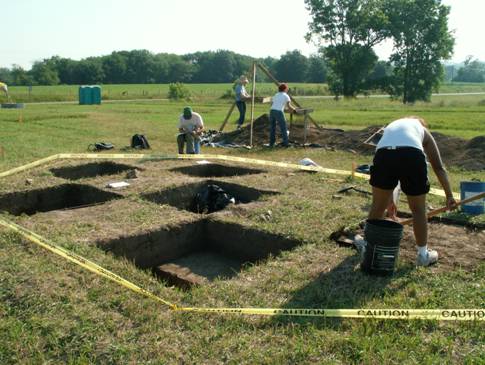
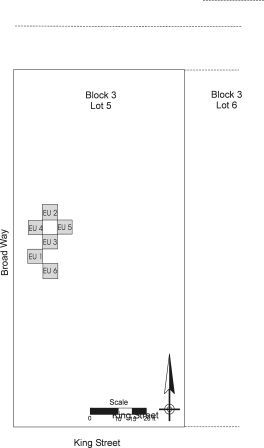
The Geophysical survey indicates that an anomaly exists toward the middle of the western end of the lot, close to Broad Way Street. An examination of the 1939 aerial photograph of New Philadelphia shows no visible landscape features. Therefore, archaeologists decided to ground truth the anomaly. Since no improvements appear on the 1867 tax assessment, there is a chance that the anomaly could be associated with an earlier occupation or activity. The spring and summer of 2005 was one of the driest summers on record and it was difficult to core the area before testing. Cores could not penetrate deep into the soil anywhere in the town site. Therefore, archaeologists proceeded with systematic testing with 5 x 5 ft. units in the area of the anomaly (Figure 3B.6 and 3B.7).
Figure 3B.6. Systematic excavations, Block 3, Lot 5 (Photograph by Christopher Valvano).
Figure 3B.7. Location of excavation units in Block 3, Lot 5 (Drawn by Carrie Christman, Eva Pajuelo and Alison Azzarello). (click on image for larger view)
In this area of the site archaeologists removed the soil in 0.5 ft. levels until a different stratigraphic layer could be detected. The plow zone tended to be about 1.3 ft. below the surface. It consisted of a 10YR 3/2 (very dark grayish brown) and the subsoil tended to be mottled with a 10YR 4/3 (brown) and 10YR 4/4 (dark yellowish brown) clay with loam. Generally, most of the artifacts recovered came from the plow zone, in levels designated A1, A2, and A3. Features 8 and 10 are present at the base of the plow zone.
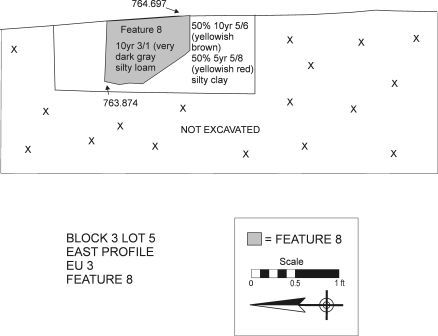
Feature 8, found in EU 3 is a post mold that measures about 0.9 x 0.9 ft. and is located toward the center of the excavation unit. The feature consists of the 10YR 3/1 (very dark grey) loam. Archaeologists bisected the feature and it extended 0.8ft. below the floor of A3. The post mold tapered toward the bottom. It is surrounded by a clayey moist soil. The profile below is of the portion still remaining, the eastern wall (Figure 3B.8).
Figure 3B.8. East profile of Feature 8 in Block 3, Lot 5(Drawn by Carrie Christman). (click image for larger view)
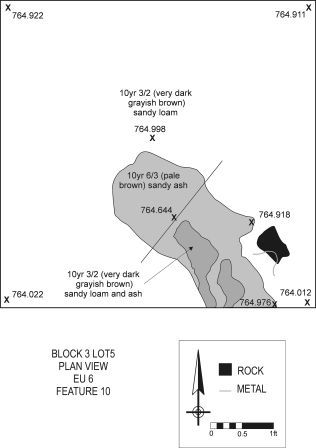
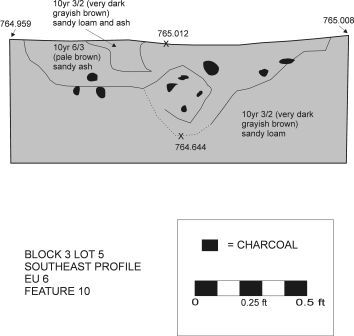
Feature 10 is located about 1.3 ft. below the plow zone in the southeastern quadrant of EU 6. It measures about 3.4 x 1.3 ft. in a southwest to northeast direction. It contains ash and bits of charcoal with a few metal fragments and consists of a 10YR 3/2 (very dark grayish brown) and a 10YR 6/3 (pale brown) sandy loam soil. The surrounding matrix is a 10YR 3/2 (very dark grayish brown) sandy loam (Figures 3B.9 and 3B.10). The archaeology team retrieved a 10 liter soil sample for floatation. Several rocks are located in the southeast corner of the unit and the soil appeared a bit darker and softer. This material may be associated with the feature, or it may be related to a larger undetected feature located adjacent to and southeast of the unit.
Figure 3B.9. Plan view of Feature 10 in Block 3, Lot 5. The feature is an ash layer. The diagonal line shows the location of the bisection and profile. The northwest portion was removed (Drawn by Carrie Christman, Eva Pajuelo and Alison Azzarello). (click on image for larger view)
Figure 3B.10. Southeast profile of Feature 10 in Excavation Unit 6 in Block 3, Lot 5 (Drawn by Carrie Christman, Eva Pajuelo and Alison Azzarello). (click on image for larger view)
BLOCK 3, LOT 6 – HISTORICAL BACKGROUND
Frank McWorter sold this lot to John Bixler in 1845. Later Kisiah Clark (also Kesiah and Casiah) sold the lot to S. Brown in 1859. In the 1855 State Census Kisiah, Clark is classified as black with four members in her household. The 1860 Federal Census classifies Staten (also Stauton) Brown as mulatto, 61 years of age and married to Penelope, 43 years of age. They have eight other members in their household and their oldest son is listed as a laborer. Potter Hadsell (in the 1870 Federal Census) may be J. P. Hadsell (listed in the 1870 Tax Records). Potter is classified as white and a farmer with a total of eight members in his household. His oldest son is a laborer. Based on the tax records Hadsell made major improvements to the lot between 1875 and 1878. Marcus Kellum purchased the lot in 1883 and also owned Lot 3, 4, and 5. In 1888 Sylvester Baker was taxed on this lot, along with several other lots and the value decreased significantly. The deed, tax and census data related to Block 3, Lot 6 follow. The names italicized are those who may have occupied the lot since they both appear in the deed and census data.
DEED TRANSACTIONS
HADLEY TOWNSHIP RECORDS
1855 STATE CENSUS
1860 FEDERAL CENSUS
1870 FEDERAL CENSUS
1880 FEDERAL CENSUS
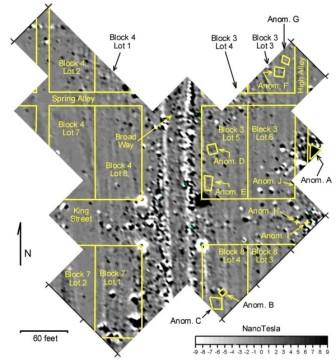
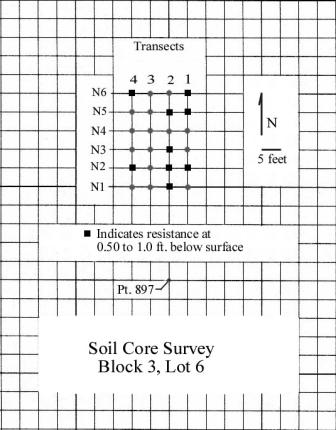
The geophysical survey located several anomalies throughout the site (Figure 3B.11). Using a 1 in. diameter core, archaeologists sampled the area in a systematic fashion. Each soil core probe was labeled by transect and core number (i.e. T1N1, T1N2, T2N1, T2N2). Transects 2 through 4 were placed in 5 ft. intervals west of transect 1 (Figure 3B.12). Soil color, depth of stratigraphy, and any physical resistance to the core probe were noted for each sample.
Figure 3B.11. Electromagnetic survey indicating several soil anomalies. (From Hargrave 2004. Grid overlay by Christopher Fennell). (click on image for larger view)
Figure 3B.12. Soil core survey of Block 3, Lot 6 in the area of Anomoly J. Pt. 897 marks the southeast corner of the lot (Drawn by Christopher Fennell).
Anomaly A is located on the west portion of the Block 3, Lot 7, and related elements of this anomaly appear to extend across the area once covered by High Alley and into the eastern edge of Block 3, Lot 6. Four transects of six cores ran in a north–south direction at 5 ft. intervals. The southern-most part of T1 is 25 ft. north and 5 ft. east of the southeast corner of Block 3, Lot 6. Core sampling hit resistance in two clustered areas: one in the north section of transects 2 and 3, and one along the southern most part of transect 2.
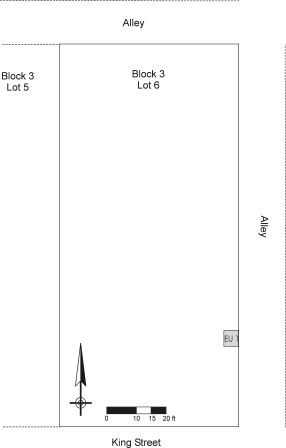
Generally, each core sample reached a depth of about 1.8 ft. below the surface. The uppermost layer consists of a 10YR3/2 (very dark grayish brown) and is located to an average depth of 0.9ft. to 1.0ft. below the surface. This soil is the plow zone. The subsoil underlies the plow zone and it consists of a 10YR 3/2 (very dark grayish brown) mottled 10YR 4/3 (brown). Some resistance occurred at the northern and southern portions of areas, T1N5 and T1N6 resistance occurs at 0.65 ft. below the surface. This resistance may have been part of the anomaly area detected by the geophysical survey. In the southern section, which includes T2N1 through T2N3, the top soil layer consists of a 10YR3/2 (very dark grayish brown). Resistance to the probe occurred at an average depth of 0.6ft. below the surface. Archaeologists placed one excavation unit that encompassed T1N2; T1N3; T2N2; T2N3. The unit was not completed by the end of the field season (Figure 3B.13).
Figure 3.B13. Location of Excavation Unit 1 in Block 3, Lot 6 in the area of Anomoly J (Drawn by Carrie Christman, Eva Pajuelo and Alison Azzarello). (click on image for larger view)
|
|
|
||||||||||||||||||||||||||||||||||||||||||||||||||||||||||||||||||||||||||||||||||||||||||||||||||||||||||||||||||||||||||||||||||||||||||||||||||||||||||||||||||||||||||||||||||||||||||||||||||||||||||||||||||||||||||||||||||||||||||||||||||||||||||||||||||||||||||||||||||||||||||||||||||||||||||||||||||||||||||||||||||||||||||||||||||||||||||||||||||||||||||||||||||||||||||||||||||||||||||||||||||||||||||||||||||||||||||||||||||||||||||||||||||||||||||||||||||||||||||||||||||||||||||||||||||||||||||||||||||||||||||||||||||||||||||||||||||||||||||||||||||||||||||||||||||||||||||||||||||||||||||||||||||||||||||||||||||||||||||||||||||||||||||||||||||||||||||||||||||||||||||||||||||||||||||||||||||||||||||||||||||||||||||||||||||||||||||||||||||||||||||||||||||||||||||||||||||||||||||||||||||||||||||||||||||||||||||||||||||||||||||||||||||||||||||||||||||||||||||||||||||||||||||||||||||||||||||||||||||||||||||||||||||||||||||||||||||||||||||||||||||||||||||||||||||||||||||||||||||||
|
© 2003-2005 University of Maryland
|
|
||||||||||||||||||||||||||||||||||||||||||||||||||||||||||||||||||||||||||||||||||||||||||||||||||||||||||||||||||||||||||||||||||||||||||||||||||||||||||||||||||||||||||||||||||||||||||||||||||||||||||||||||||||||||||||||||||||||||||||||||||||||||||||||||||||||||||||||||||||||||||||||||||||||||||||||||||||||||||||||||||||||||||||||||||||||||||||||||||||||||||||||||||||||||||||||||||||||||||||||||||||||||||||||||||||||||||||||||||||||||||||||||||||||||||||||||||||||||||||||||||||||||||||||||||||||||||||||||||||||||||||||||||||||||||||||||||||||||||||||||||||||||||||||||||||||||||||||||||||||||||||||||||||||||||||||||||||||||||||||||||||||||||||||||||||||||||||||||||||||||||||||||||||||||||||||||||||||||||||||||||||||||||||||||||||||||||||||||||||||||||||||||||||||||||||||||||||||||||||||||||||||||||||||||||||||||||||||||||||||||||||||||||||||||||||||||||||||||||||||||||||||||||||||||||||||||||||||||||||||||||||||||||||||||||||||||||||||||||||||||||||||||||||||||||||||||||||||||||||||